
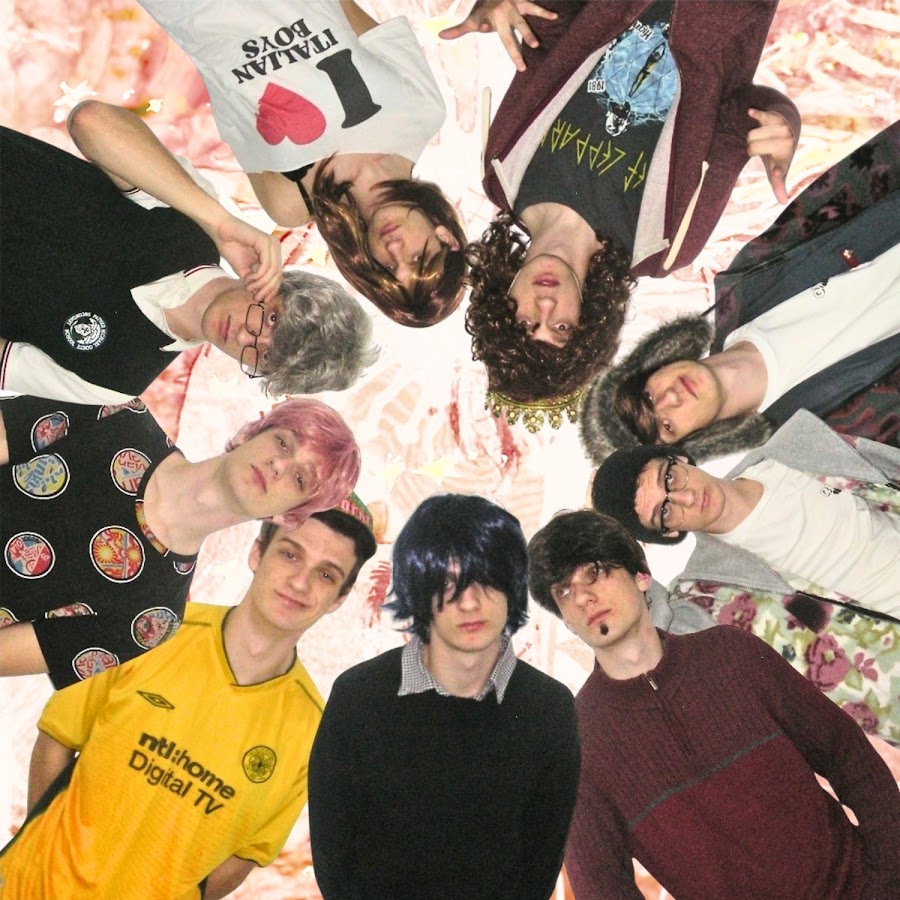
WHO IS RICKY JAMARAZ AND WHAT IS THE JAMARAZ MUSIC UNIVERSE:
Ricky Jamaraz is Thomas Ison’s stage name. Thomas is from Nottingham, United Kingdom, and last year he started a new journey. Beginning with an artist named Sammy Phase, an alias he goes by online. Releasing a new EP under the name and set in 1997. Since then, he has released under 6 more aliases: Sammy Phase (10 Songs), Ross Wonder (26 Songs), Sweat Glass Halo (5 Songs), KiNG HERTZiE (8 songs), Crashtune Megavex (5 songs), Sometimes, I Sit (7 songs), and Glinter (11 songs).
Currently, Thomas is preparing for the release of Sweat Glass Halo’s first album.
Thomas uses these aliases to create a story in his own universe. Each artist tells their own stories and collaborates with others. Each one also follows a different genre, except his main account, Ricky Jamaraz.
MUSIC AND SOCIAL LINKS:

Ricky Jamaraz (mixed genres):
Sammy Phase (aka Samuel Peters):

Ross Wonder (aka Russell Wallace):

Sweat Glass Halo (aka Ash Caldaire, Elliot Ness, Rhia Morris):

KiNG HERTZiE (aka Archie Hopeland):

Crashtune Megavex (aka Vincent and Tomas Julian):

Sometimes, I Sit (unknown members):

Glinter (aka Pete Wicker, John Marshall, and Boris Wolfs):

INTERVIEW

About a month ago, I interviewed Thomas. During the interview, we discussed his upcoming projects, collaborations, recording techniques, and the future of his music. Here is our transcribed interview (please read it, it took 8 hours to transcribe, the video interview is coming soon):
Since we last talked, Tom, the Jamaraz Music Universe has taken off. Originally, you were planning for your 9th album, an electronic album called Tio Jamaraz. However, that album turned into Saint Club Major, which is still unreleased. A lot of fans are excited, and I’ve heard people who aren’t regular listeners are as well! Can we expect it in the near future, and any hints as to when?
THOMAS: Yeah, so it’s kind of a funny thing; it [Tio Jamaraz] was all a short-lived thing. It was while I was trying to figure out what I wanted to do before releasing music under different names that I came up with the idea of the Jamaraz Music Universe. But I knew I wanted to try something different.
If I had been actively working on it, it would be done by now; obviously, I haven’t worked on it for a while now. But I’ve had my mind on a lot of my other projects! I think I’ll probably get on it towards the end of this year. I’ve already planned out the rest of this year until Autumn in terms of music, but after that, I think I’ll probably work on all of Saint Club Major and get it done.
For fans who don’t know, you’re currently working on two LP’s, one from Sweat Glass Halo and one from Sammy Phase. Both are coming later this year. What are some artists you’re taking inspiration from for them currently?
THOMAS: So, Sweat Glass Halo is this band; they are a three-piece: a bassist, a synth player, and a drummer. It’s a unique style of band with them having no guitar, and a few people have actually emailed me asking for my inspirations for them. I don’t know of many bands that sound like them. The band that kind of started the idea for Sweat Glass Halo is a band called Late of the Pier. They’re a really small band from the late 2000s; they only released one album, but they’re really cool, with an indietronica sound. There’s also this band called Johnny Foreigner, who are a little bit more popular; some of my fans are familiar with them, they’re quite an inspiration because they’re kind of high-energy indie-rock from the 2000’s, too. Anything like that is very inspiring to me.
With Sammy Phase stuff, which will come later this year, the original inspiration was a combination of Elliot Smith and Alex G, who are two of my favorite artists ever. It’s this kind of acoustic indie singer-songwriter thing that’s quite close to my heart. As the project has developed, I’ve kind of taken inspiration from things like The Velvet Underground and Nick Drake, and earlier kinda 60’s and 70’s singer-songwriter stuff.
Any unique things fans can expect from either artist on the new LPs? Are there things fans should be getting excited about?
THOMAS: You should be excited about the upcoming albums! I don’t really know, it’s just new music innit, I’m always making new music. I don’t think there’s anything in particular you should look out for, but there are some songs I know will be better than others. Especially with Sammy Phase, there are some songs I’ve written, and I just put my guitar down, and I’m like, “Whoa, did I write that? That’s actually pretty good.” So, I think it’ll be nice of people to have a listen to those songs, and they mean a lot to me, so it’ll be nice to share them and pass them on to my fans.
Going back to a previous question. Currently, the JMU has 7 artists, including those two, with the others being Ross Wonder, King Hertzie, Crashtune Megavex, Sometimes I Sit, and Glinter. For those artists who inspired them, or are inspiring them right now?
THOMAS: Ross Wonder is kind of an instrumental hip-hop artist/producer. What inspired that was probably J Dilla, an instrumental hip-hop producer from the late 1990s, who died in the early 2000s. He is very inspiring; his album Donuts is one of my favorite albums ever. Just in general, I’ve always been a fan of old school hip-hop, mainly 90s stuff. But I’ve never made it, so one day I just decided I’d make it, and it was April 21st, 2025, that I made the first Ross Wonder beat, and that was my introduction into that type of music.
King Hertzie and Crashtune Megavex are pretty similar because both are oriented around electronic music. Which again is something I didn’t really explore with my Ricky Jamaraz music, which is something I wanted to change. I wanted to explore more stuff and break the barriers of what I was doing. So, King Hertzie is a lot more psychedelic, while Crashtune Megavex is a lot more polished and poppy, more mainstream-sounding, but still experimental, which is quite nice. In terms of inspirations for those Neon Indian inspired King Hertzie, very much so. Neon Indian is this artist, Alan Palomo, who is the guy behind Neon Indian. He made some cool trippy electronic music in the late 2000’s and early 2010s, it’s this subgenre of electronic music called Chillwave. Crashtune Megavex, I don’t even know, they are inspired by any type of 2015 polished pop music you heard on the radio.
Sometimes, I Sit is kind of the oddball right now, because I kind of make ambient music when I’m bored and can’t sleep. Last year, I had a phase where I made a few ambient tracks, and I released them just under Tom’s Ambient Project, didn’t tell anyone, and somehow people found it. So, I took it down and released it under Sometimes, I Sit because sometimes I do sit. Brian Eno is a big inspiration since he literally invented ambient music.
Finally, Glinter is inspired mostly by Pavement because they’re one of my favorite bands ever. They’re this band from the 90’s, they kind of pioneered the slacker-indie-rock sound. Which is quite present in the Glinter sound.
Do we have a name for the Sammy LP?
THOMAS: I’ve got a couple of names in my head, but I haven’t settled on anything yet. I’m not just keeping it secret. I generally like to name albums after I finish writing them, and I haven’t finished writing it yet. But I will say, for all of my albums, I like to have some underlying theme, concept, or story, something like that. For the Sammy Phase album, the loose concept I’ve been following is about love, because love is endless songwriting inspiration for me, but it’s tied to the moon, and using the moon as a metaphor for someone you love, and the narrator, Sammy, being the sea, as it relates to the lore in-universe because he dies in sea later (spoiler alert). But he is the sea, and his love interest is the moon, and it’s kind of like how tides work, which is kind of the idea. But for the songs I’ve been writing, it’s very moon-based. So, I want the name of the album to be something moon-based, but I don’t know yet.
Just this past weekend, you actually played for Knutmo Five and were at Dorset Caravan’s show. You work with both bands, mixing for Dorset Caravan and playing drums for Knutmo Five. What’s it like working with others to build a project instead of being by yourself?
THOMAS: What’s it like? It’s weird for me, because I’m very, very used to doing all of this stuff myself. It’s a very rare opportunity that I work with others in my musical adventures. The reason I work with these people is that they are my best friends, and I feel I can only collaborate with someone when they’re that close to me. It’s fun when it’s with your best mates, because you can just have a laugh like we were friends first before we were music partners or whatever. So really, all the music we make together stems from our friendship. So it’s really nice and valuable to me. Even though sometimes the idea of it is uncomfortable to me, genuinely, because I’m so used to being on my own doing things. But regardless, if I’m doing it with my best friends, it’s fun, and I like it.
Last year, you released six EPs, two albums, a deluxe edition of an album, and a B-side single, all in the span of 11 months, 83 songs, including Young Gold Country. This year, you have already released two albums, with a total of 16 songs. How do you manage to write so much music so consistently?
THOMAS: I don’t know. Obviously, this is a very good question. I get asked it a lot. Basically, there are a couple of theories on the playing table. One theory is that I mean, I dedicate a lot of time, literally my whole life is music, there is nothing more important than music other than my family and friends. Music is incredibly important to me; I spend every waking moment thinking about it, and if I’m not thinking about it, I’m making music. So I really do write a lot. Recently, I’ve had a creative block, but that’s mostly because I’ve been working on some other stuff to do with my music career, which is more computer-related and actually making it a career. On average, I write 1-2 songs a week; sometimes I’ll write 4 in a week, sometimes I’ll only write 1 every 2 weeks.
- So, theory number one, I just do a lot, I just don’t have that many other hobbies, I really don’t. I have friends, obviously, but I don’t have loads of friends; I’m not a very social person; I’m quite an introverted person. So, I don’t really feel the need to go out and see people all the time, just seeing people like once a week or so that kind of satisfies me enough. I don’t feel like I need to dedicate that much time to catch up with people all the time, and my friends understand that. It’s kind of like a mutual understanding. So I just spend a lot of evenings on my own making music, and I love it.
- Theory number two, which kind of goes hand in hand with that, is that I really need music. Anyone creative will understand this; creating something is such an important part of self-expression, and there are a lot of things going on in my mind all the time. I just happen to be quite good at music, so that’s the easiest way to express what I’m feeling all the time. I’ve gotten pretty good at tuning in to all the things I do feel, and I need some way to put it out there and make it real. Otherwise, if it were stuck in my head, it would drive me crazy. I feel like even if I wanted to stop making music, which I never would, but even if I wanted to, I couldn’t. I feel like it just flows out of me like breathing out, I just breathe it out. I love it, it’s great. Those are my theories; make of that what you will.
It’s still awesome, though, to be able to make that much music in such a short amount of time. A lot of artists just release 12 songs over a span of four years. The amount of creativity is awesome.
THOMAS: Another thing that really helps is the fact that I do it all myself. I don’t really have anyone else to rely on. I record everything myself, mix everything myself, and publish it all myself. So I don’t have to send it off to anyone and then wait to get it back to send it to someone else. I can do it all myself, I’m like a one-stop music machine. It’s quite nice to have all those characters along the chain, and like going from the idea of a song to a finished song, there are a lot of different steps, and traditionally, each part has a different person attached to it. When it’s all just me, I can end up putting out a lot of stuff. There’s no friction, because someone else has their own life and their own things going on. I think that’s how I can get something out so quickly. I’ve had a lot of practice doing that, so I’ve gotten quite good at doing things quickly.
For a lot of your music, in the past two years, such as Return To Zero, Sammy Phase, and Glinter, you’ve made use of cassettes. Can you tell us a bit about that process and some difficulties you’ve faced?
THOMAS: I love cassettes; it’s a very fun and alternative process to recording music as opposed to computers, which is the standard in the modern era. I first started recording on cassettes at the end of 2023. I just started experimenting; it came from a place where I was doing all the things I had been doing, and I had just recorded my 6th album, December 13th, 1998. So I had recorded 6 albums on a computer in 2 or 3 years, and I fancied doing something else. So, I got into recording demos on tapes like that and slowly upgraded my tape machine, then I just decided to record an album on tape, and that’s where Return To Zero came from.
It’s a very different process; you wouldn’t think it’s that different compared to recording on a computer, because you’re still recording the same thing. But the act of recording on a cassette is a very different process. It’s not that accessible either; cassette machines and cassettes themselves can get quite expensive, because you have to actually invest in them for it to sound good. But if you do get a chance to buy a shitty small cassette recorder and a couple of old cassettes, I would recommend it! It changes your outlook on music entirely because you don’t have an undo, you can’t just hit control z, and just retry that vocal take. You have to properly rewind, wait for the tape to rewind, stop, record, and do it again in one take. You can’t really edit things on tape; it’s insanely hard, you just wouldn’t do that, it involves getting the tape out, straightening it out, cutting it, and taping it back together. So you have to get used to playing your instrument, actually, well, and singing things correctly, and it makes you a better musician. It made me a better musician when I’m recording things, because tapes just force you to be more natural, and force you to show the real you, which is quite bare. It’s great.
For other artists that you’re working with, what’s the process behind that? Are you doing different forms of recording? Is it just cassettes and DAWs, or are there other ways as well?
THOMAS: A big part of the Jamaraz Music Universe thing is, especially as a kid, I’ve always been fascinated with the past, like the contemporary past, anything from like 1950 to the present. I’ve always been fascinated with recently in terms of human history recently, but before I was born, I love the history of recording music because it’s really changed a lot in the last 100 years. What I’m really passionate about is making the Jamaraz Music Universe realistic, so it has all these projects set in the 90s and 2000s, and there will be more set in the 60s and 70s. I’m interested in creating a realistic product, like an album. If I’m saying it was released in 1993, like the Glinter album, my most recent project, if I’m saying it was released in 1993, I’m going to record it as if it was 1993. Otherwise, how are people expected to believe that it really was from 1993? Realism is really important to me.
Recording stuff like that [Glinter], like I recorded that fully on a cassette recorder, I’m not sure if in 1993 they had the exact same cassette recorder that I had. But I’m not gonna fork out a bunch of money to get another cassette recorder that I’ve got with just a different number on it.
Generally, for recording, it is either a tape or a computer. Obviously, in the late 90s and early 2000s, there was a crossover weird period where people had a sort of digital cassette recorder because computers were getting better but not quite advanced enough to record a whole music project and get good quality audio. So there were these standalone DAWs, and I do have one, which I’ve meant to sell for ages, but it’s in terms of sound that’s what I’m bothered with. A standalone digital thing like that would sound no different than if you recorded it today on a computer. So for Sweat Glass Halo, I’m just going to record it on my computer just like I would normally. Because they would’ve probably used a standalone digital recorder thing, or maybe if they forked out a lot of money, they could get a proper computer. But when you’re listening to the actual album, you’re gonna hear digital sound either way. It’s just a case of, do I record on tape for a slightly older sound, or do I record on my computer for a more digital sound? I don’t focus on it too much, though.
You did an amazing fundraiser recently, you worked with CALM and War Child! A really great fundraiser, but I don’t think you’ve gotten the money back yet! I just want to say thank you, and that, as far as my understanding goes, a lot of fans are very happy you did that.
THOMAS: It was about time that I did that, because I do have a big online platform and I do have the capability to do something, and I want to do more things like that in the future. It just takes a lot of planning to make it as high-impact as possible. Yeah, so all the people who bought CDs and Vinyls of the compilation Across My Universe, all of those profits will be going to the charities CALM and War Child, split 50-50. I sold them on this website called Elastic Stage, which is a website where you can sell your music on a physical format, and people will go to their website and buy the music, and the artist will get the money, but the money is delayed for a month. So when I get the money, I’ll take it and donate it! I look forward to doing that and sharing how much was donated. I know it’s been a while, but I don’t want people to think I sold all of that and didn’t donate it. I just literally didn’t have the money yet, so that’ll be taken care of soon. In the future, you can definitely expect more things like that!
Sort of a side note, but I’ve not always been fond of compilations. I like listening to them, but I’ve always thought for my own music because I’m so focused on the album as an experience. Listening to an album all the way through is very important; the order of the songs I’ve always taken great care in creating the album as a whole thing, it’s not just a collection of songs, it is an album, so that’s why in my head I’ve always been against compilations of my music. It feels quite shallow to just lump a bunch of the best songs in there, but I feel like compilations are good, I’ll sell more in the future, and all the profits of those will go to charity! I know other people would love compilations of my music because other people can’t be bothered to listen to all of my albums and all the tracks.
Not ignoring that contribution, but for this fundraiser, you released both a regular and deluxe version, featuring songs from many JMU artists. On the deluxe, a few haven’t appeared yet, such as The Everbrides, Ash Caldaire (the frontman of SGH), and The B.M.F. Can we expect a release from each of those artists in the future?
THOMAS: Yes, I’ve got on my computer a database with ideas and spreadsheets of ideas. I’ve got loads of different artists that I want to make real, it’s just a case of picking one. I don’t know if you will get all of those in the next year or so. I can’t really promise anything because I have so many ideas, those three are just scratching the surface.
I mean, for example, all the demos for Tio Jamaraz on Patreon are still unreleased and coming out for Saint Club Major. Those have been there for almost a year or two years now. So like definitely at some point, but not necessarily a month from now.
All those Tio Jamaraz demos are basically Crashtune Megavex, which is the continuation, like Tio Jamaraz died, I’m happy that it’s dead, but all the Saint Club Major stuff that is going to be a product of Crashtune Megavex that is gonna be their album, a two-part album. All those songs that are on the Patreon that people are like, “Are you going to release these? It’s been like two years.” I will definitely, and that will all be a part of the Crashtune Megavex series, and I will probably begin focusing on that this Autumn, or at the start of Winter.
How do you go about brushing off hate comments and people discrediting your work? I know for some people it can often be a hard route to navigate, without letting it get to their head.
THOMAS: It always gets to me, obviously, because I put so much effort into everything I do, and anyone can understand. It just feels like why me? You didn’t have to say that; that’s what I think all the time. It doesn’t happen very often, to be fair, partly because and my friends joke about this, but because I’m chronically offline. I really don’t spend that much time online at all. I know I post stuff on Instagram, but I barely use it; I really only have it to post stuff. I try my best not to check it as much as possible, so if I do get hate comments, I don’t see most of them, to be fair.
How do I cope with it, though? You just gotta cope with it. Some people just don’t get your vibe. Maybe they would understand you if you just changed something about the way that you did it, but you did what you could. That’s fair enough, we are all humans, we’re not all meant to like the same things, it’s just not that deep. I’ve got LOADS of people who love my stuff, obviously, that’s what you have to focus on, you have to focus on the bright side, otherwise it would drive you crazy.
Just talking about Young Gold Country, a lot of people have been confused about that. I know that with the whole Jamaraz Music Universe thing, it’s crazy. There’s a lot of stuff going on, there’s a lot of moving parts, and it takes a lot of brainpower to take in everything. I understand that it’s not a simple idea. I know a few people, I don’t know where or when, but the general vibe was, “Why are you releasing all this music under different artist names? It’s so confusing. Just release another Ricky Jamaraz album.” I was like “No, I don’t like that.” So, I thought, okay, here, have another Ricky Jamaraz album, and I just made it as shit as possible. The most random noise ever. My friend Alfie and I, who I’m in Knutmo Five with, made it together, and it’s basically just a bunch of recordings I made on my computer when I was 9 or 10. We just got those recordings and messed about with them on my computer, and made them as ugly as possible. I thought call that an album, put that out there, and they can have another Ricky Jamaraz album, and I’ll keep doing my thing over here. So that was a little petty, but it’s funny, isn’t it? But you only live once, so you might as well. That’s how I deal with it, I just troll them.
If y’all haven’t listened to Ocean Breeze, man, you don’t know what you’re missing out on. Ocean Breeze is awesome. For Young Gold Country as a whole, Ocean Breeze is probably a little gold nugget.
THOMAS: I don’t even remember which one that is. How does it go?
I can’t even think, I don’t even wanna try to reciprocate it.
THOMAS: Yeah, haha, cause it’d just make you sound like a lunatic.
It would. It mentions something about being in love with an alien
THOMAS: Oh yeah, so, I’m in loveee, I’m in loveee with an alien.
It’s funny, I like it, it’s just like a little gold nugget in the whole thing.
You sampled 137 songs last year and are continuing to sample. Are there any songs that you are excited to sample, or a favorite artist to sample?
THOMAS: Ooo, good question! Any songs I’m excited to sample, let me just pull out my phone. I have a playlist called “Must Sample.” It’s just full of songs that I must sample, y’know. I don’t even know.
I scrolled through the Ross Wonder stuff on your Patreon, and seeing Stephanie, Pt. 2, and that has like 4 different samples, and I couldn’t even find what parts of the songs are being sampled. It’s so cool.
THOMAS: Yeah, that song is very, very sample-heavy. Basically, it’s obviously mainly Stephanie Says by The Velvet Underground, and then it’s got Is It Really So Strange by The Smiths at the start. The other two samples are little piano hits! I love mixing samples together; it’s just so great when you can take a song and completely flip it.
But a song that I’m really excited to sample is anything by this band that I recently found called The Cleaners From Venus, they’re very cool, and they make a lot of quite cool indie-ish music, but they’re from the late 70s and early 80s. I was thinking of sampling their stuff for some new King Hertzie stuff I was working on!
One of my favorite artists to sample is probably, well, I made a video at the end of last year where I talked about my favorite artists to sample, and I think the artist I sampled the most was Prince or Def Leppard. I think Def Leppard is my favorite band to sample, which I did a lot for the King Hertzie project; a lot of his songs sampled them. They’re a little bit of a cheesy 80s rock band. They were one of my favorite bands as a kid, but I really love them, and they have a really nice sound when you sample them, slow them down, and make them a little bit more electronic like with the King Hertzie stuff. It just has a very unique flavor to it that I love.
Do you have a side job, or do you make all your money from music and merchandise?
THOMAS: No, I don’t have a side-hustle; all the money I do make is from my music in some or another, either from streaming royalties or also like PRS, which is a publishing rights kind of organization that collects money if your song is played on the radio, they pay you money for that. Without them, I would be losing a lot of money if it wasn’t for them, and obviously merch sales and stuff. I don’t have any other source of income but what I make from my music right now, which is kind of a nice source of income. I can only hope that when I finish college this summer, I can go straight in and do everything I’m doing now, but just more. Hopefully, if all goes well, I can just support myself with music!
If music wasn’t an option, what would you do?
THOMAS: That’s difficult. I just can’t imagine music not being an option. It would have to be something creative; there’s no way I could just wake up, go to work in an office, have my lunch, and work some more, drive home, and then just sit in front of the television and go to bed. If that were my life, that would just be such a waste of my time. It would have to be something creative. I really like photography and videography, so if I didn’t have music, I’d delve into something like that, something visual. But I would do so very reluctantly. I cannot imagine my life without music; it does not compute.
I completely understand where that is coming from; I couldn’t live like an office job life either; it would just be so boring.
THOMAS: I know, and no hate to people who do have those lives. If that satisfies you, then go ahead! If that is what makes you happy, then that’s what makes you happy, but it wouldn’t make me happy.
You’ve previously stated that you scrapped an album called “Affordable Happiness” and shared a few of those songs on Patreon. Have you scrapped any other projects since then, other than Tio Jamaraz, which we’ve talked about occured, and do you plan to release them?
THOMAS: I don’t think so. I release almost everything I make. If something isn’t going well, I just make it into something else and then release it anyway, so nothing really gets scrapped. I always recycle as much as I can, if you know what I mean in terms of my music. Yeah, I genuinely can’t think of anything, nothing comes to mind!
I know a lot of fans aren’t located near Nottingham, and that you don’t do very many live shows. Do you have any ideas for a JMU tour, and could it possibly ever go international?
THOMAS: I know a lot of my fans really want me to play live more, and the people who have seen me play live tell me they want me to play more. But just me being me, I’m not very fond of it myself; I just find it exhausting. I don’t mind, like a couple of nights ago, I played a gig with Knutmo Five, which is a band that I drum in. I don’t mind that because when I’m drumming, I’m at the back, obviously, I’m still in the spotlight because I’m on a stage. But I don’t have to completely capture the audience’s attention. Obviously, I was exhausted after that show, but I wasn’t mentally exhausted. But being front and center, performing my own stuff, by the end, I am always, without fail, very exhausted, and I don’t really enjoy it. I don’t enjoy it before, I’m not excited beforehand, and the only thing I feel afterwards is just relief that it’s over. Eventually, it might change, it’s just me right now. I just prefer to be in my room, just recording music and writing it, that’s just where I flourish. In the future, that might change, hopefully it will because I like the idea of doing shows for all the different Jamaraz Music Universe projects, stuff like Sweat Glass Halo, that would be really fun to play live. I just don’t see it happening, definitely not in the next year, maybe after that. Who knows? I just feel like I’ve got so many ideas, cause the thing is, the more time I dedicate to playing live, the more time I have to practice playing with the band and then there’s time spent playing at gigs and going to gigs, and that’s time that I could’ve spent writing new songs, and I feel like I want that to be my priority, I just have so many more songs to write.
Is there any way fans can get more involved with the JMU?
THOMAS: There’s something that, when I was updating my website, about a year ago, I put the link to collaborate in there. I thought it would be a nice idea at some point to have the Jamaraz Music Universe be more of a larger kind of collaborative thing, where other musicians can also be characters, too, but ultimately, I kind of gave up on it a little bit because I was focusing so much on my contributions to it. I feel like overseeing and organizing something like that with other people, again, it always ties back to how comfortable I am on my own. Just making music on my own. It feels a little too much out of my comfort zone, right now, to include other people, especially people that I don’t really know, with this project. But the reason that I deliberately have that link on my website still is that you can fill out the form if you’re a musician or an artist or whatever, just fill out a few details, and it gets added to a database I have on my computer somewhere. Just a list of creative people that I could work with in the future, because everything changes. I’m not going to feel this way forever, but eventually, at some point, I’m going to sit down and admit to myself that I can’t do it all myself anymore. So when that time eventually comes, whenever it comes, I will have this list of people who are willing to help. So that’s what it’s for, but if you’re a fan of mine and you want to be more involved, I’m afraid right now, there’s a very, very low chance of that happening. Because I’m so busy with everything that I’m working on, not to be selfish or anything, but like, unless you’re Aflie or Ollie, who are my two best music friends, there’s a very low chance you will be involved, as of right now, of course.
There’s an excessive amount of lore for the JMU. Can it be difficult to write out storylines, and do you find yourself changing them?
THOMAS: Excessive is the correct word, yeah. Honestly, it’s not difficult for me. I have it all in my head, and again, I have the massive document on my computer of all the stories, storylines, timelines, and things written down. It’s not difficult yet to keep track of, I feel like I’m pretty good at keeping track so far. I look forward to the day when people learn about it and stuff, and someone says something about the lore of an artist, and I’ll be like “Oh yeah, I forgot about that.” That’ll be the coolest thing ever, people learn all these things about all these fictional things, and then they tell me about it, and I’m like, yeah, I forgot I wrote that. But I love it, I’ve always been writing stories since I was a little kid. It’s great, I love it.
Can fans expect more different media from the JMU in the future, such as Race To The City? Whether that be character videos or lore-related videos?
THOMAS: I would love to do that more, even though it is the Jamaraz Music Universe, maybe one day it can be the Jamaraz Media Universe, to include more visual stuff, because more and more in the last year, I’ve been more interested in visual arts and stuff. I have thought about the idea of having characters who were filmmakers, and they made films that you can watch, and a musician’s favorite film is one by a director who lives in the same city as them. I can’t wait to expand it more like that, and it is just one of those things that’s so massive that it’s an area where I would really love to be more collaborative with other people. I think that would be really great to do.
Is there anything you want to talk about, or any fan questions you’ve seen recently that you could answer?
THOMAS: I don’t know, not really. A lot of people ask me for advice on things, whether it be just advice on making music or writing and stuff, so I know some people might be wanting me to answer that. Basically, my answer that I’ve developed for when people ask me for advice is that I’m not going to give you any advice, because I think genuinely the thing that you need to do if you want to be creative, but you don’t know where to start, you just have to start somewhere, and once you start if you don’t like what you did then do something else, you don’t need to know how to write a song. It can be one chord on a guitar and a single note melody. If you didn’t like that, then try doing two chords, or if you like that, then write more songs that are one chord all the way through. If you want to be creative, then you just have to create. There’s no shortcut unless you use AI, which you can do if you want, but you’ll find that it’s not really fun and you’ll get bored with it really quickly, I imagine. So just have fun with it, and really just don’t search for advice, because any advice I could give to anyone, the likelihood is that it probably won’t even apply to them, because stuff that’s worked for me in my life may not work for you because our lives are very different. So you just have to start, and start asking for advice, and just get on with it. That is my advice for anyone who is on the edge and wants to start. I get this. If you haven’t done it before, it’s always nerve-racking starting something new, but just take a leap of faith, dive in.
What will fans see from you in general in the next year?
THOMAS: Here’s the whole roadmap for 2026 so far:
I’ve basically finished writing the Sweat Glass Halo album, and I’m going to be recording that in the next couple of weeks, and my aim is to be done with it by the end of April. That will be released sometime in the summer, fairly early in the summer, I think. So that will be the first thing fans can expect.
For, Sammy Phase I will be writing that while I record the Sweat Glass Halo stuff, and then once I finish that, I will record that in the summer sometime, and while I’m recording that, I will begin writing the next thing! That could be Saint Club Major, or something else, I have no clue, I guess I just have to find out and see what tickles my fancy when it comes to it.
The Sammy Phase album, I’m not sure when that will come out, but I’m hoping for late Autumn this year! That’s what you can expect!
CONCLUSION
Wow, that was a lot of info. I hope your head isn’t exploding! Thank you for reading. If you made it the whole way through, I know that was a LOT. But there’s a lot of cool stuff happening in the world and the mind of Thomas Ison, and I know he wanted to get some of that info out there. After the interview, we had a small conversation and talked a little bit more, but there were no questions left to add! I know we both are hoping to do something similar to this again in the future, and I can’t wait to see what changes from now to then. Keep your eyes out for the interview on YouTube!
Thomas also recently mentioned that the Sweat Glass Halo album will be fully documented like Return To Zero!
Thank you to Thomas; this was a fantastic opportunity, and while our plans changed a few times, it went extremely well. I cannot wait to see what comes in the future of your ever-growing universe.
Thanks,
Caleb Hysell
CREDITS
Interviewee: Thomas A. Ison
Interviewer: Caleb Hysell
Writer: Caleb Hysell
Article Editor: Caleb Hysell
© 2026 DID YOU KNOW: MUSICIANS PUBLISHING
Leave a Reply